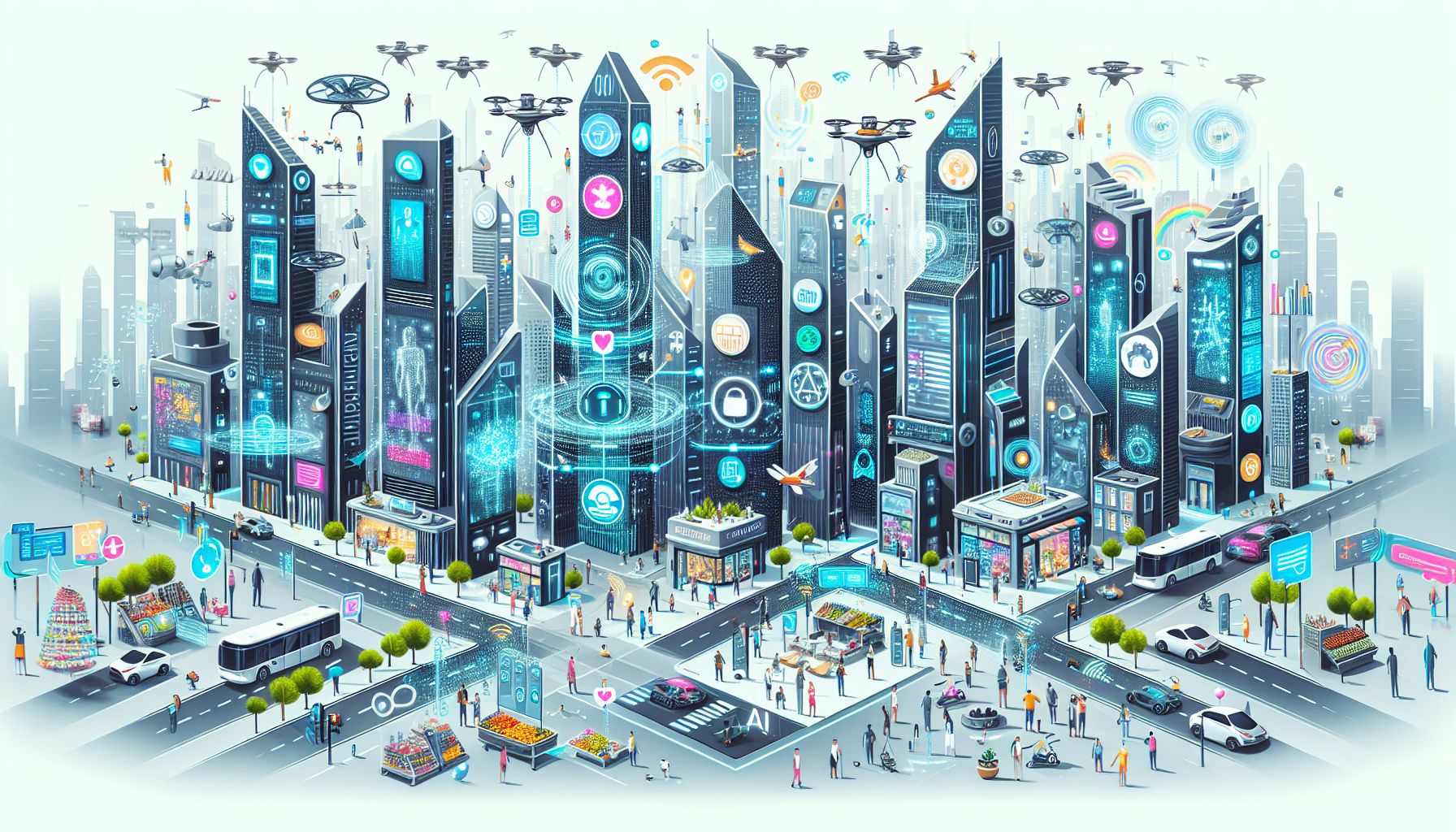
Artificial Intelligence (AI) isn’t just about self-driving cars or AI-powered chatbots. It’s about personalization—knowing not just what people want, but predicting when they want it, often before they even realize it themselves. This isn’t sci-fi or dystopia; it’s a real breakthrough in machine learning that’s changing how we live our daily lives.
AI Enters the Phase of Hyper-Personalization
AI systems are getting scary good at analyzing huge amounts of data and learning from them in real-time. This isn’t just theory anymore—it’s practical, functional, and sitting right in your pocket. Look at Netflix’s recommendation engine, Amazon’s product suggestions, or Spotify’s playlist curations. They’ve completely changed how we consume content, making everything feel personally crafted just for us.
The Technology Behind Personalization
AI personalization systems work through machine learning algorithms that analyze existing data and predict future trends. Unlike traditional models that rely on static data, AI is dynamic and adapts in real-time. Techniques like deep neural networks, convolutional neural networks, and reinforcement learning give AI the ability to understand complex patterns and user behaviors. What used to be impersonal algorithms now feel like intuitive assistants.
The Role of Natural Language Processing
Natural Language Processing (NLP) adds another layer to AI’s sophistication. Thanks to NLP, AI systems can understand and essentially “converse” in human language, adapting to our queries and refining their predictions. Whether it’s Google Answer Boxes responding to vague questions or smart devices integrating with household items, NLP gives AI a human touch that feels deeply personal and surprisingly effective.
AI in Consumer Experience: Beyond Recommendations
AI personalization goes way beyond recommendations. Retailers are using AI to shape entire customer journeys, from virtual dressing rooms that suggest perfect fits to tailored online experiences that evolve in real-time. These innovations don’t just simplify shopping—they make it uniquely ours.
Personalization in Health and Wellness
Healthcare is where AI personalization gets really interesting. Machine learning models can now process genetic, lifestyle, and biochemical data to predict potential health issues and suggest customized lifestyle changes. With wearable technology, AI performs continuous monitoring, offering predictive analytics as a proactive healthcare partner. Imagine your smartwatch detecting tiny changes in your heart rate and instantly alerting you and your doctor—potentially saving lives through real-time intervention.
The Promise of Predictive Diagnostics
AI is also speeding up diagnostic processes through predictive analytics. Hospitals using AI see a noticeable reduction in diagnostic errors. The technology helps with faster, more accurate readings of medical images and patient histories, ensuring personalized treatment pathways are more accurate than ever before.
Hyper-Personalization Beyond Individual Users: Societal Impacts
While hyper-personalization mainly focuses on enhancing individual experiences, its effects ripple through society at large. From improving educational tools tailored to individual learning styles to optimizing urban planning through AI-driven simulations, the societal benefits of hyper-personalization are substantial.
Personalization and Education
AI’s personalization abilities could completely transform education. With access to students’ learning patterns and difficulties, AI can create educational programs uniquely suited to each learner. Personalized tutoring systems can adapt in real-time, presenting material in forms that click with each student, leading to better learning outcomes.
Urban Planning and the Smart City Revolution
Urban landscapes are transforming into Smart Cities, powered by AI’s personalization capabilities. Data-driven insights help city planners create spaces that accommodate not just current needs but future demands. Think adaptive traffic systems that reduce congestion in real-time, based on predictive algorithms that understand traffic flow—improving both efficiency and sustainability.
The Ethical Considerations and Challenges Ahead
Despite its huge potential, the path to hyper-personalization is loaded with ethical and practical challenges. Issues related to data privacy, algorithmic bias, and dependence on AI-led decisions become magnified in a personalized environment.
Balancing Personalization with Privacy
One of the biggest concerns is ensuring data privacy. How do we use personal data to improve user experiences without invading privacy or exposing sensitive information? Creating robust legislative measures and building transparency into AI systems is crucial. Implementing controls that allow users to customize the degree of personalization can provide a balanced approach, ensuring users feel in control of their personal data.
Tackling Algorithmic Bias
Algorithmic bias is another critical issue. AI systems learn from historical data, which can encode biases. Training AI models on diverse datasets that reflect varied demographics helps reduce bias, though continuous updates and audits are required to maintain fairness and inclusivity.
Conclusion: Embracing the Future
As AI continues its march toward deeper personalization, we need to navigate these changes thoughtfully. The potential for AI to enhance comfort, safety, and efficiency is immense, but it comes with responsibility and careful consideration.
By actively engaging with these technologies, advocating for ethical practices, and staying vigilant about privacy, we can maximize the benefits of hyper-personalization. It’s a digital evolution that holds promise not only for remarkable individual experiences but transformative societal progress.
Honestly, while AI’s hyper-personalization might sound like the ultimate convenience, it’s shaping up to be much more—a glimpse of a future where technology doesn’t just respond to us, but anticipates our needs. It’s order from chaos, service carved from data, a genuine companion in our everyday tech journey. So the next time Netflix recommends that oddly specific thriller you didn’t know you wanted, or Spotify nails your exact mood, you’re witnessing AI’s breakthrough in real-time.